Beyond the Buzzwords: Reflections from FreightWaves F3 and the Future of AI in Freight
The FreightWaves F3: Future of Freight Festival was buzzing with energy this week, and predictably, AI was a hot topic. Despite the hype, much of what we observed seemed to be familiar functionality presented in slightly different forms. Here are my takeaways.

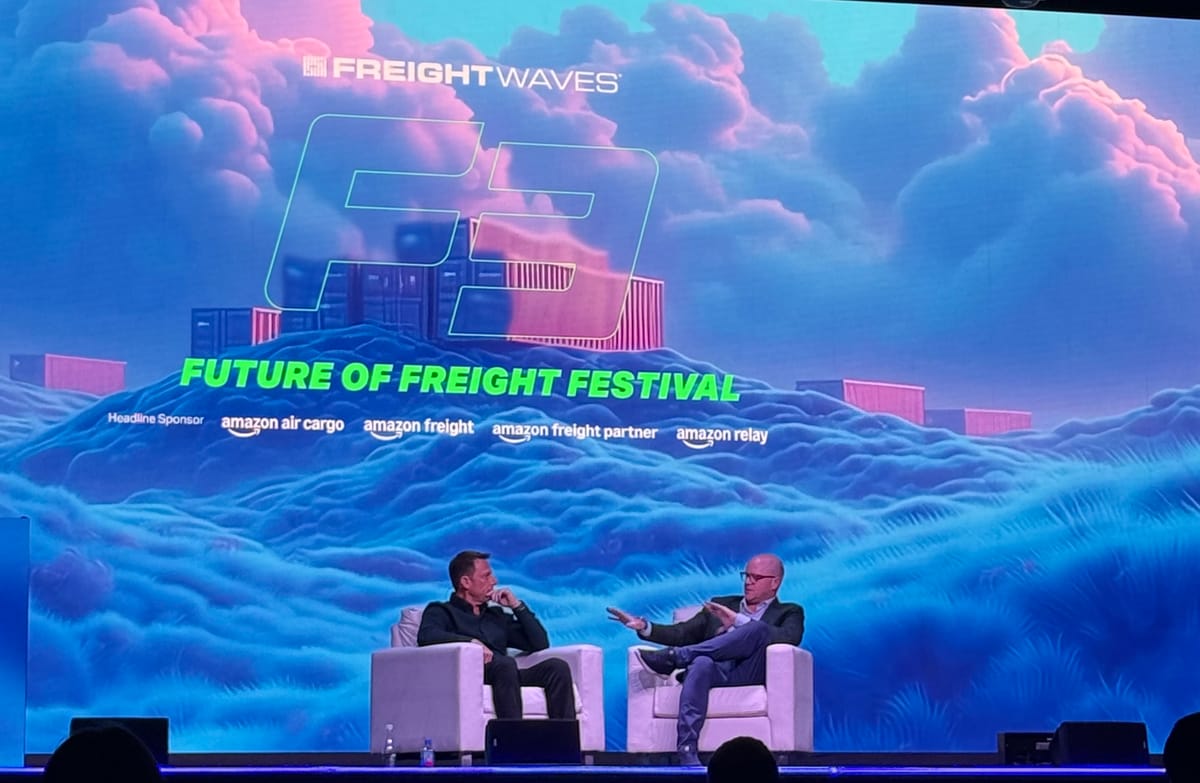
The FreightWaves F3: Future of Freight Festival was buzzing with energy last week, and predictably, AI was a hot topic. Everywhere you turned, companies were touting “AI-powered platforms,” “intelligent automation,” and “autonomous decisioning.” Despite the hype, much of what we observed seemed to be familiar functionality presented in slightly different forms.
Several recurring themes emerged:
1. Building for Today vs. Building for Tomorrow
Too many founders are still solving today’s visible problems instead of building for the future. That’s not entirely their fault. Their customers are often stuck in the same mindset. But this is exactly where the opportunity lies: to wedge in by solving the now, while architecting for what’s next.
For example, as I mentioned on stage this week with Craig Fuller, the “load board wars” will not exist in the future because load boards themselves will not exist. They’ll be replaced by intelligent systems that remember, learn, and execute without human intervention.
2. AI That Isn’t Really AI
Many legacy freight management systems are promoting AI solutions that are actually built on robotic process automation (RPA). They’re scripting tasks, not teaching systems to learn. True AI requires model training, data depth, and observability — not just buttons that move data from one screen to another. Put simply, RPA can’t learn, but AI can.
To remain competitive in an evolving industry that will prioritize intelligence over traditional workflows, these companies will inevitably face a critical decision: either acquire an existing AI-native platform or undertake the significant effort of rebuilding their core system from the ground up. This challenging, yet essential, choice is vital for their survival.
3. The Back-Office Boom and Limitations
There’s an emerging wave of AI startups focused on automating back-office work. While their ambition is right, their execution is premature. Many lack scale, customers, and, most importantly, an understanding of the deep complexity of freight operations.
AI in logistics isn’t plug-and-play. It requires industry context, massive data training, and continuous refinement. Those who underestimate that reality will struggle to move beyond flashy demos.
4. In Live Demos We Trust
It wasn’t difficult to notice how many companies were relying on pre-recorded AI demos. Trying to demonstrate interactivity with a scripted video just doesn’t have the same impact that a live demo would. To foster trust within this industry, authenticity is paramount and outweighs theatrical presentations.
6. UI Still Matters (For Now)
While the long-term promise of AI will diminish the need for traditional interfaces, UI still matters today — not for aesthetics, but for storytelling. The interface is how abstract intelligence becomes tangible. It’s how skeptical operators begin to believe.
Just like in childhood “show and tell,” the best demos show before they tell. A thoughtful UI doesn’t just demonstrate capability; it builds conviction. It helps people say, “That’s better than what we do today.”
Looking Ahead
F3 highlighted the nascent understanding of AI within the freight tech industry. The next wave won’t be defined by who automates the most tasks, but by who builds systems that learn, decide, and evolve.
Ultimately, the core objective of AI in logistics is to reduce the latency and discrepancy between incoming information and the resulting action. As the legendary supply chain leader Dave Clark recently stated in the context of supply chain management, this is about "Reflexive Velocity—the gap between signal and response."